


Views: 0 Author: Site Editor Publish Time: 2026-10-15 Origin: Site


Packaging engineers often face a frustrating reality on the production floor. A master roll tests perfectly for Oxygen Transmission Rate (OTR) and Water Vapor Transmission Rate (WVTR). Yet, after conversion into a multilayer laminate, the material fails barrier requirements completely. This discrepancy directly compromises product integrity. It leads to premature spoilage, shortened shelf life, and expensive packaging recalls. Scrapping entire production runs wastes massive amounts of material and labor. Furthermore, these barrier failures derail corporate lightweighting initiatives. Brands find themselves forced to revert to heavier, thicker packaging formats just to maintain acceptable shelf life. We need to stop treating the symptoms and address the root causes. Thermal stress, adhesive incompatibility, and mechanical tension drive these failures during conversion. Understanding these specific variables provides a clear framework. You can evaluate lamination processes and vendor capabilities to prevent these costly defects from reaching the filling line.
Micro-cracking is the primary culprit: Excessive web tension and thermal stress during lamination fracture the nanometer-thin aluminum layer, causing immediate metallized film barrier loss.
Adhesive chemistry matters: Improper adhesive selection can lead to chemical interactions or poor bonding, resulting in metal transfer (delamination) where the metal layer separates from the base polymer.
Process control dictates outcome: Upgrading to high-barrier substrates is ineffective if the converter lacks precise control over laminator temperature, nip pressure, and curing speeds.
Substrate compatibility is critical: Mismatched thermal shrinkage rates between the metallized web and the secondary web lead to inner curling and structural stress.
Testing must reflect converted reality: Relying solely on raw film spec sheets is a critical error; barrier performance must be evaluated post-lamination and post-curing.
Metallized films consist of a polymer substrate, such as PET or OPP, coated with a thin aluminum layer. During lamination, excessive heat, web tension, or uneven pressure may damage the metal coating, creating microscopic defects that reduce oxygen and moisture barrier performance.
Proper process control helps preserve coating integrity and minimize metallized film barrier loss.
Metallized PET (MetPET) and Metallized OPP (MetOPP) respond differently to processing conditions. PET generally provides better dimensional stability at elevated temperatures, while OPP requires careful tension and temperature control during lamination.
Property | MetPET | MetOPP |
|---|---|---|
Thermal Stability | Generally higher | More temperature-sensitive |
Dimensional Stability | Good under suitable processing conditions | Requires careful tension control |
Barrier Performance | Depends on coating quality and structure | Depends on coating quality and structure |
Typical Applications | Coffee, high-barrier flexible packaging | Snacks, confectionery, dry foods |
Explore our Metallized PET Film for flexible packaging applications requiring oxygen, moisture, and light protection.
OTR (Oxygen Transmission Rate) and WVTR (Water Vapor Transmission Rate) may change after lamination due to coating defects, mechanical stress, or adhesive-related issues.
Packaging manufacturers should compare raw film specifications with finished laminate test results under equivalent conditions. Common methods include ASTM D3985 for OTR and ASTM F1249 for WVTR.
These measurements help determine whether lamination affects the required barrier performance.
Metallized film barrier damage can result from excessive heat, web tension, incompatible materials, and poor adhesive bonding. Identifying these factors helps packaging manufacturers reduce coating defects and maintain consistent OTR and WVTR performance.
Excessive lamination temperatures may cause substrate deformation and stress within the aluminum coating. Insufficient heating or unsuitable processing speeds can also affect adhesive bonding.
Converters should optimize drying temperature, nip temperature, and line speed according to the film and adhesive specifications.
Web tension directly affects metallized film stability during lamination. Excessive or uneven tension can stretch the polymer substrate, potentially creating microcracks in the aluminum coating.
Maintaining stable unwind, nip, and rewind tension helps reduce wrinkles, film distortion, and coating damage.
Lamination curling may occur when combined films have different shrinkage or dimensional stability characteristics.
Selecting compatible substrates and controlling processing conditions helps reduce internal stress, curling, and potential bond deterioration.
Adhesive selection influences metallized film adhesion and finished laminate durability. Incompatible formulations, improper mixing ratios, or unsuitable curing conditions may weaken bonding or contribute to metal transfer.
Manufacturers should verify adhesive compatibility through preliminary lamination trials and appropriate bond-strength testing.
Metal transfer occurs when the aluminum coating separates from the original substrate and adheres to another layer. Poor metal adhesion, adhesive incompatibility, or processing stress can contribute to this failure.
For demanding packaging structures, consider our High Barrier Metallized PET Film, and verify metal adhesion and finished-laminate barrier performance under actual converting conditions.
Potential Problem | Main Cause | Preventive Measure |
|---|---|---|
Coating Microcracks | Excessive stretching or mechanical stress | Optimize web tension |
Film Distortion | Unsuitable temperature or processing conditions | Control heat and line speed |
Laminate Curling | Different substrate shrinkage properties | Select compatible film structures |
Weak Bond Strength | Adhesive or curing problems | Conduct lamination trials |
Metal Transfer | Poor coating adhesion or interlayer stress | Verify adhesion and bond strength |
Increased OTR/WVTR | Coating damage or laminate defects | Test finished laminates |
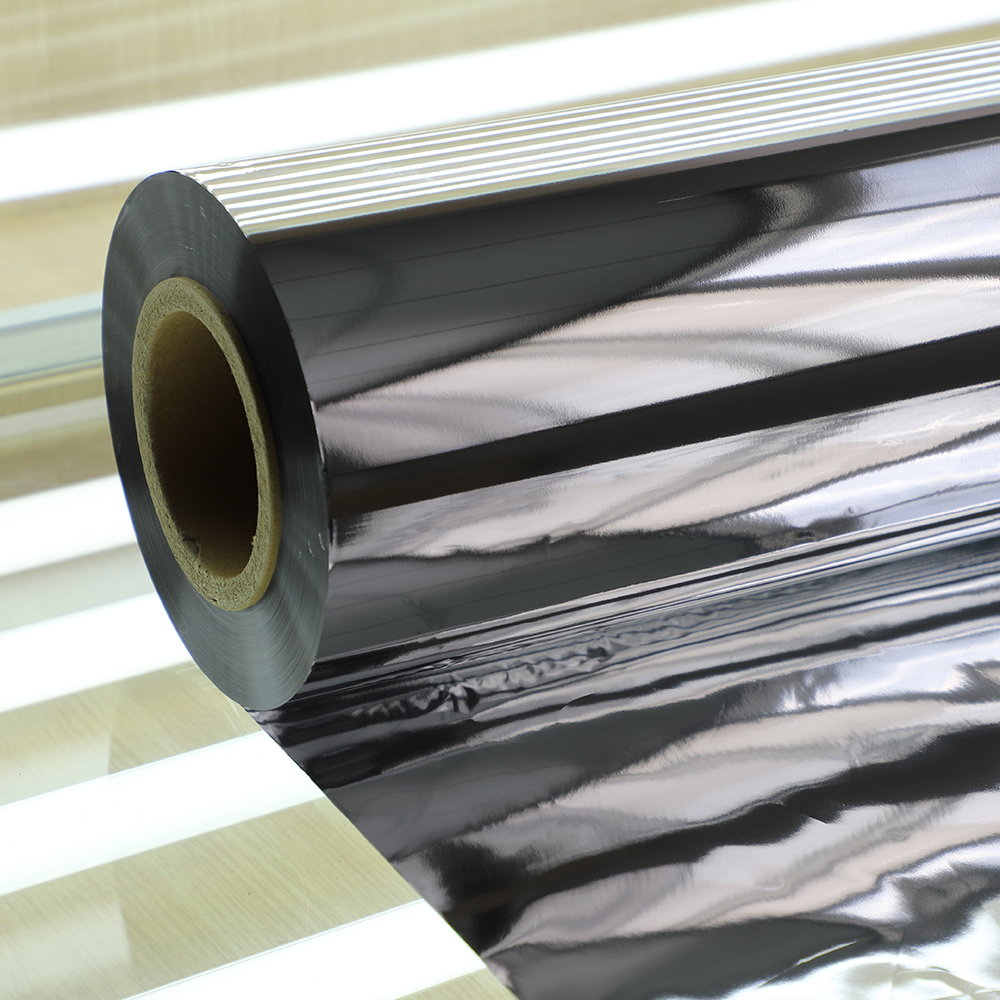
Dry lamination and solventless lamination are widely used to produce multilayer flexible packaging. Both methods can process metallized films, but their effects on coating adhesion, barrier performance, and production efficiency differ.
Selecting the right method requires evaluating film structure, adhesive compatibility, processing conditions, and required OTR and WVTR performance.
Lamination Method | Main Advantages | Key Considerations |
|---|---|---|
Dry Lamination | Flexible adhesive selection, established bonding performance | Solvent removal, drying temperature, residual solvent control |
Solventless Lamination | No solvent-drying oven, reduced solvent emissions | Adhesive mixing, coating uniformity, curing conditions |
Adhesive compatibility directly affects metallized film bonding strength and barrier reliability. Suitable adhesives should provide consistent coating, appropriate flexibility, and reliable adhesion without damaging the metallized surface.
For food packaging, adhesive selection must also consider applicable food-contact and migration requirements.
Explore our High Barrier Metallized PET Film for flexible packaging applications requiring oxygen, moisture, and light protection.
Lamination equipment settings influence film stability and coating integrity. Excessive tension, uneven nip pressure, or unsuitable temperatures may cause wrinkles, coating damage, or inconsistent bonding.
Key equipment considerations include:
Web Tension Control: Prevents excessive stretching and film deformation.
Nip Pressure Control: Supports uniform adhesive bonding.
Temperature Regulation: Helps maintain stable processing conditions.
Web Alignment: Reduces wrinkles and edge defects.
Coating Weight Control: Supports consistent adhesive application.
Proper process control helps maintain metallized film quality during conversion.
When selecting high barrier packaging films, manufacturers should compare coating technology, lamination requirements, material costs, and recyclability. The best solution depends on the finished package rather than barrier performance alone.
AlOx and SiOx coated films provide transparent oxygen and moisture barrier options, while conventional metallized films also offer light protection.
Both coating types can be sensitive to mechanical damage during converting. Manufacturers should verify coating adhesion, flexibility, and barrier performance after lamination.
For transparent packaging solutions, explore our High Barrier AlOx Coated Film.
Multilayer packaging costs depend on film thickness, adhesive consumption, converting efficiency, and finished-package performance.
Selecting the lowest-cost lamination process does not always provide the best overall value. Poor bonding or coating damage may increase material waste and reduce barrier reliability.
Packaging manufacturers should compare total production costs alongside tested OTR, WVTR, and lamination bond strength.
Recyclable high barrier packaging increasingly uses PE- or PP-based structures to simplify material composition.
However, adhesives, barrier coatings, and additional polymer layers can affect recyclability. Metallized mono-material structures may offer advantages where they meet the requirements of applicable recycling systems.
Manufacturers should verify both finished-package barrier performance and recyclability before selecting materials.
Evaluation Factor | What to Consider |
|---|---|
Barrier Performance | OTR and WVTR after lamination |
Adhesive Compatibility | Bond strength and coating adhesion |
Processing Stability | Tension, temperature, nip pressure |
Production Cost | Adhesive, energy, yield, and waste |
Sustainability | Material structure and recycling compatibility |
Barrier degradation is rarely a defect of the raw film itself. It is almost always a symptom of misaligned lamination parameters. Incompatible adhesives, mismatched substrate shrinkage, and poor tension control destroy the protective metal layer. Procurement and engineering teams must select lamination partners based on technical capability. Look for demonstrated ability to control web tension and expertise in adhesive chemistry. Prioritize vendors who willingly guarantee post-converted barrier metrics rather than just raw material specs.
Take the following actions to protect your packaging integrity:
Request a comprehensive technical audit of your current multilayer structure from your converting partner.
Initiate a pilot lamination trial using alternative, low-stress adhesive systems to compare bond strength and metal transfer.
Implement a mandatory three-stage testing protocol for all new barrier film qualifications.
Calibrate all tension control systems and load cells on your internal or vendor laminators.
A: The increase in Oxygen Transmission Rate stems from micro-cracking in the aluminum layer. Thermal stress from drying ovens, improper laminating speeds, and mechanical elongation stretch the film beyond its elastic limit. This fractures the rigid metal coating, allowing gases to permeate easily.
A: Metal transfer occurs when the adhesive bonds stronger to the aluminum layer than the aluminum bonds to its base polymer. During curing or physical flexing, the adhesive pulls the metal completely off the base film, destroying the barrier and structural integrity.
A: Prevent inner curling by selecting substrates with compatible thermal shrinkage rates. If the secondary web shrinks significantly more than the metallized web after cooling, the tension differential forces the laminate to curl inward. Matching shrinkage profiles eliminates this physical stress.
A: Solventless lamination eliminates the intense heat of drying ovens, which significantly reduces thermal stress and micro-cracking. However, it requires highly precise control over adhesive viscosity and coating weight to prevent uneven wet-out and subsequent metal transfer during the longer curing process.
A: You should test barrier performance at three stages: raw roll stock, immediately post-lamination, and strictly post-curing. Testing too early, before adhesives fully cross-link, yields false failure data. Always wait for the recommended curing time to complete before final validation.
A: Yes. Certain aggressive adhesive monomers or solvents can penetrate microscopic pores in the metal layer. They chemically attack the bond between the aluminum and the base polymer, weakening the structure and leading to delamination and barrier failure over time.


